
Best Ways to Clean Dryer Vents Safely at Home
A dryer that suddenly takes two or three cycles to dry a normal load is not just frustrating. It is often telling you that lint is building up where you cannot see it. The best ways to clean dryer vents combine safe routine maintenance with a realistic understanding of when a long, hidden vent line needs professional equipment.
Dryer vent cleaning protects more than your laundry schedule. Lint restricts airflow, forces the dryer to work harder, wastes energy, and can create a serious fire hazard. For homeowners, renters, property managers, and businesses, keeping this system clear is a practical part of maintaining a healthy, efficient property.
Start With the Lint Screen Every Load
The lint screen is the first line of defense, and it should be cleaned before or after every dryer load. Pull it out, remove the visible lint by hand, and return it securely. This small habit keeps loose lint from being pulled farther into the appliance or vent system.
Even a screen that looks clean can develop a thin film from dryer sheets, fabric softener, or laundry products. That residue reduces airflow through the mesh. Every few months, wash the screen with warm water, a soft brush, and a small amount of dish soap. Let it dry fully before putting it back in the dryer.
While the screen is removed, use a vacuum crevice tool to carefully remove lint from the screen housing. Avoid forcing a tool deep into the opening or pushing lint farther down the duct. The goal is to remove what is accessible without damaging the dryer or creating a blockage out of reach.
Clean Behind and Beneath the Dryer
Lint does not stay neatly inside the vent. It collects behind the appliance, under the dryer, and around the transition hose that connects the dryer to the wall. Unplug an electric dryer before moving it. For a gas dryer, turn off the gas supply if you need to disconnect or substantially move the appliance, or call a qualified professional to handle that step.
Carefully pull the dryer away from the wall and vacuum the floor, wall area, and back of the machine. Check for crushed, kinked, or loose connections. A damaged vent hose can trap lint and prevent hot, moist air from leaving the home efficiently.
The transition hose should be short, properly supported, and made from rigid or semi-rigid metal whenever possible. Flexible plastic or foil-style ducts can sag, tear, and collect lint in their ridges. Replacing an outdated connector is often a meaningful safety improvement, particularly in older homes or rental properties.
Use a Dryer Vent Brush for Short, Straight Runs
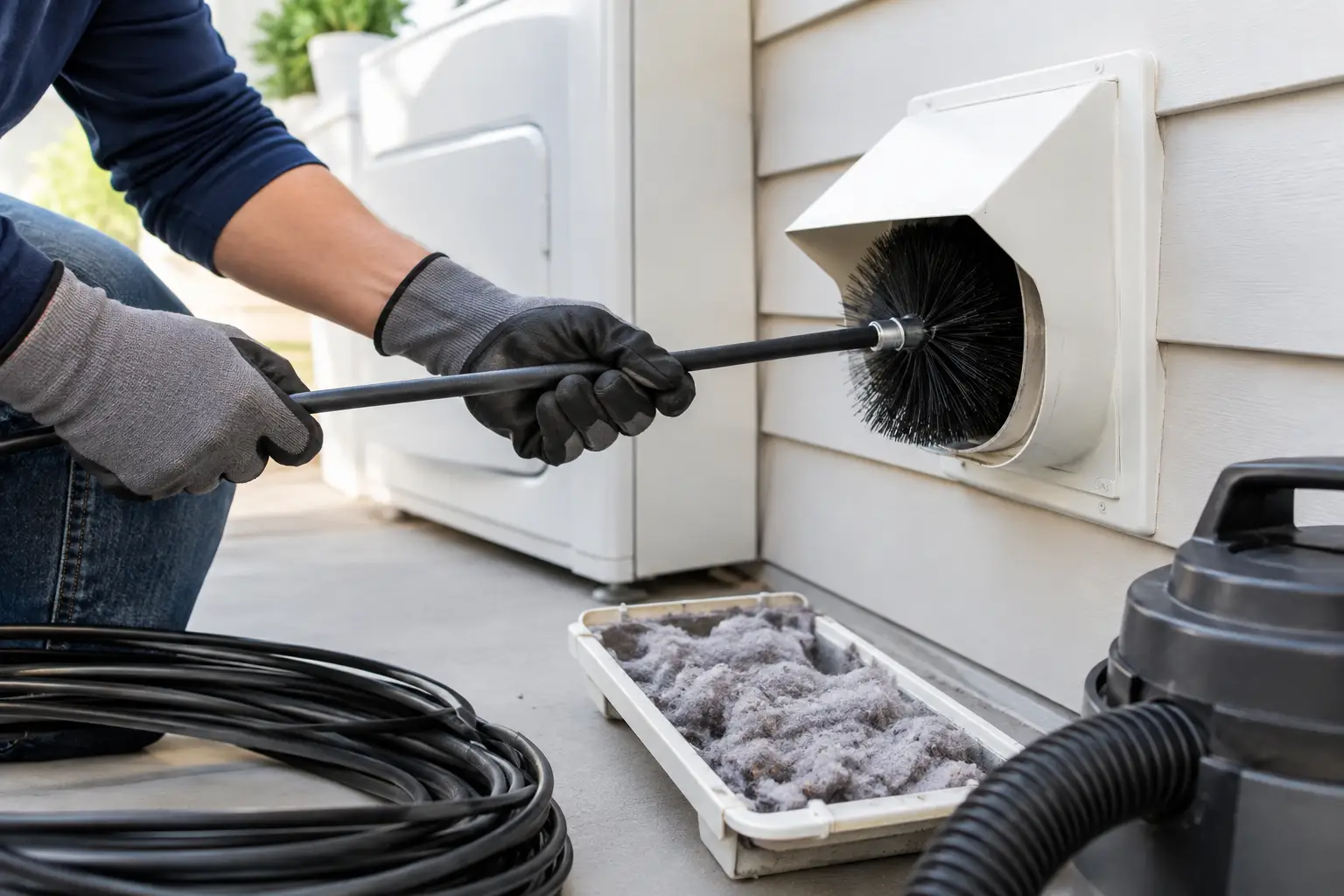
For a short vent line with a direct path to the exterior, a dryer vent brush kit can be an effective do-it-yourself tool. These kits typically use flexible rods and a rotating brush designed to loosen lint inside the duct. Follow the manufacturer instructions closely, and work slowly.
Disconnect the transition hose from the wall and clean the accessible section first. Then insert the brush into the wall duct in short increments. Withdraw it periodically to remove lint from the brush rather than packing debris deeper into the line. A vacuum can help capture loosened lint near the opening.
This method works best when the duct is relatively straight and you know the route from the laundry area to the exterior vent. It is less reliable for long runs, multiple turns, rooftop exits, or ducts that travel through attics, crawl spaces, or shared building spaces. In those cases, the brush may not reach the full line or may get caught at a bend.
Check and Clear the Exterior Vent Hood
Go outside while the dryer is running on an air-dry or low-heat setting. The exterior vent hood should open freely and release a steady flow of air. If the flap barely moves, air feels weak, or lint is visible around the hood, the line may be restricted.
Remove lint from the hood and surrounding area by hand or with a soft brush. Keep landscaping, storage items, and outdoor furniture from blocking the outlet. Never cover the vent with fine mesh or screen material. While it may seem like a way to keep pests out, mesh catches lint quickly and can create the same airflow problem you are trying to prevent.
A proper exterior cover should prevent pests and weather intrusion while allowing the damper to open fully during use. If the hood is cracked, missing, painted shut, or difficult to open, it should be repaired or replaced.
Know the Warning Signs of a Blocked Dryer Vent
A lint screen can be clean while the vent line behind it is heavily restricted. Watch for changes in how the dryer performs. Common signs include:
Clothes taking longer than one cycle to dry
Laundry or the dryer exterior feeling unusually hot
A burning or musty smell during operation
Excess lint around the dryer or exterior vent opening
Little or no airflow at the outdoor vent hood
Condensation, humidity, or a damp laundry room
Do not continue running repeated cycles when these signs appear. Overheating can damage the dryer, raise utility costs, and increase fire risk. If you smell burning, turn off the dryer immediately and arrange for an inspection.
Why Professional Dryer Vent Cleaning Is Often the Better Choice
DIY cleaning is helpful for visible lint and basic upkeep, but it has limits. A professional cleaning is the safer choice when the vent is long, concealed, heavily clogged, or connected to a multi-unit property. Trained technicians use purpose-built brushes, high-powered vacuum systems, and airflow testing to remove lint from the entire accessible duct path.
Professional service can also identify problems a basic cleaning cannot solve, such as disconnected ducts inside a wall, sharp bends, crushed sections, improper materials, bird nests, or a vent route that does not meet current safety expectations. Cleaning a line without correcting those issues may only provide a temporary improvement.
For property managers and commercial operators, professional dryer vent maintenance is especially valuable. Multiple dryers, high laundry volume, tenant turnover, and shared vent routes can allow lint to accumulate quickly. Documented service helps protect equipment, supports preventive maintenance planning, and gives residents or guests greater peace of mind.
How Often Should Dryer Vents Be Cleaned?
Most households should have the full dryer vent system inspected and cleaned about once a year. The right schedule depends on how often the dryer is used, the size of the household, the type of laundry, and the vent layout. Families with frequent laundry loads, pet owners, homes with long vent runs, and properties where drying time has increased may need service more often.
Businesses, vacation rentals, apartment communities, salons, gyms, and other facilities with regular towel or linen loads should set a maintenance schedule based on actual use. Waiting until dryers stop performing well usually means the buildup has already become significant.
Between professional appointments, clean the lint screen every load, check the exterior hood monthly, and keep the laundry area free of lint and clutter. These simple practices help your dryer operate as designed and make it easier to spot a problem early.
Avoid Shortcuts That Can Make the Problem Worse
Do not use a leaf blower to force lint through the duct. It can push debris into bends, damage weak connections, or create a mess in areas you cannot access. Avoid running the dryer with the vent disconnected indoors, even briefly. The appliance releases moisture and fine lint that can affect indoor air quality and encourage mildew.
It is also wise to avoid excessively long flexible vent hoses and tight 90-degree turns behind the dryer. A cleaner vent is only part of the solution. The path needs to allow air to move freely from the appliance to the outside.
A dryer vent should never be an out-of-sight, out-of-mind part of your home. If drying times are getting longer or airflow seems weak, addressing it promptly can protect your dryer and your property. Pristine Steam provides thorough dryer vent cleaning for Southern California homes and businesses that want a cleaner, safer, more efficient laundry area.


Comments