
Carpet Extraction vs Encapsulation Compared
- Aug 9
- 5 min read
A carpet can look clean after a quick maintenance service and still hold gritty soil, oils, allergens, or pet residue below the fibers. That is why carpet extraction vs encapsulation is not simply a question of which method is better. It is a question of what is in the carpet, how it is used, and what result you need from the cleaning.
For a busy office, hotel hallway, rental turnover, or a home with pets and children, the right approach can protect carpet appearance, improve indoor cleanliness, and help flooring last longer. Both methods have a place. The difference is in how deeply they clean, how quickly the carpet dries, and when each method makes practical sense.
What Is Carpet Extraction?
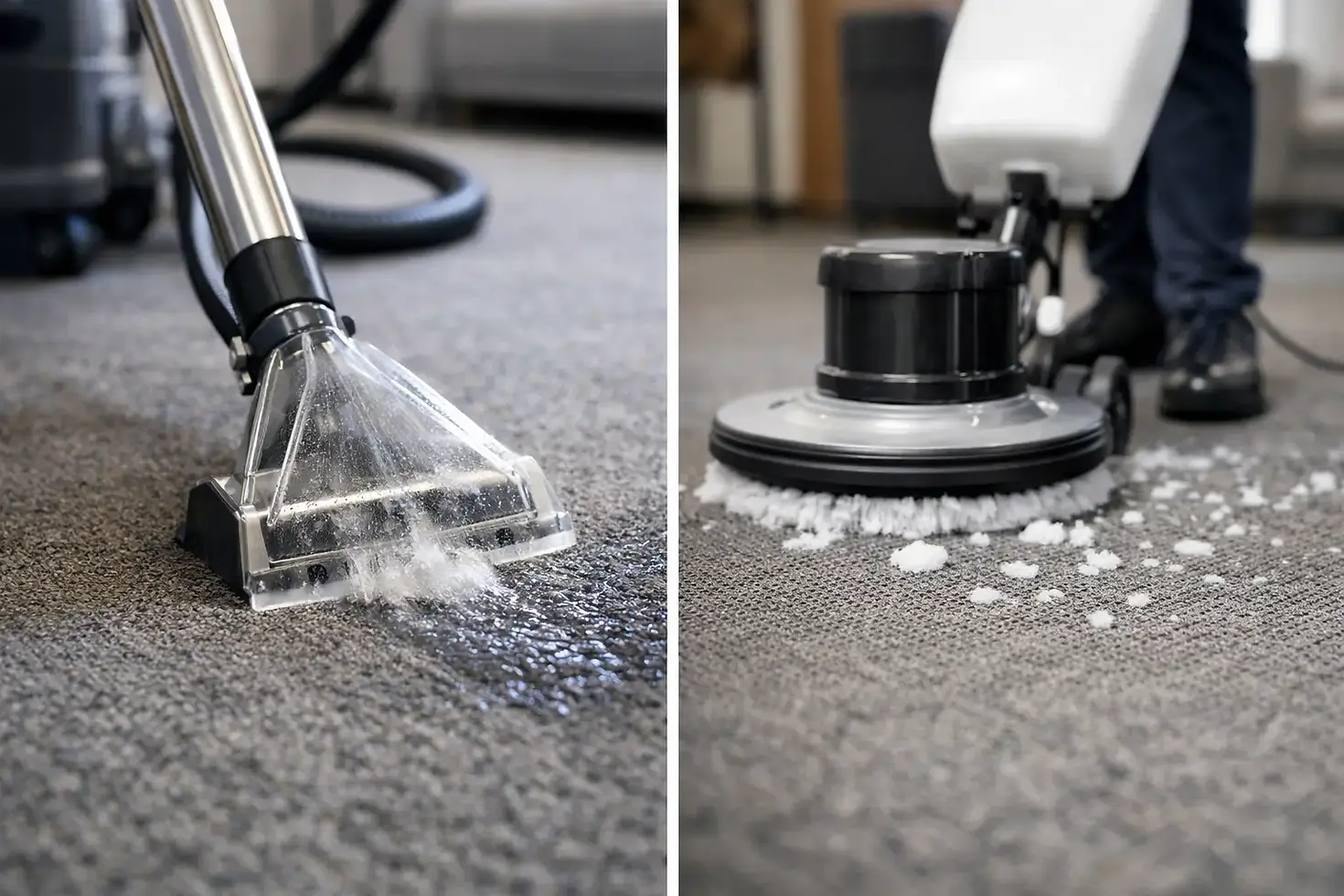
Carpet extraction, often called hot water extraction or steam cleaning, uses a professional machine to apply a controlled cleaning solution and heated water into the carpet fibers. Powerful vacuum recovery then pulls the solution, loosened soil, and moisture back out of the carpet.
Despite the common name, professional steam cleaning is not about soaking carpet with clouds of steam. Quality extraction is a measured process. A technician evaluates the fiber type, soil level, stains, and backing before choosing the appropriate cleaning agents, agitation, water temperature, and drying plan.
This method is designed to flush out embedded contaminants that ordinary vacuuming cannot reach. Think of the fine dust tracked in from dry Southern California conditions, residue from shoes and cooking oils, pet accidents, drink spills, and the dulling soil that settles at the base of high-traffic fibers.
Extraction is especially effective when a carpet needs more than a surface refresh. It can provide a noticeable reset for living rooms, bedrooms, move-in or move-out cleanings, and commercial spaces where appearance and hygiene both matter.
The benefits and trade-offs of extraction
The biggest advantage of extraction is soil removal. When performed correctly, it removes suspended dirt rather than simply treating it in place. It is also the preferred foundation for odor treatment, stain work, and heavily soiled carpet restoration.
The trade-off is drying time. Most professionally extracted carpets dry within several hours, but timing depends on humidity, carpet thickness, airflow, the amount of soil present, and whether the carpet was previously over-wet. Opening windows when outdoor conditions allow, running ceiling fans, and maintaining indoor airflow can help.
A properly trained technician should never leave carpet saturated. Excessive moisture can create wicking, where stains rise back to the surface as the carpet dries, and can cause concerns for the padding or subfloor. Equipment quality, recovery power, and technician technique make a meaningful difference.
What Is Carpet Encapsulation?
Encapsulation cleaning uses a low-moisture solution containing polymers. The solution surrounds or "encapsulates" loosened soil as it dries. Once dry, the residue becomes brittle and can be removed through routine vacuuming or post-cleaning vacuuming.
The method is commonly used in commercial carpet maintenance because it dries quickly and allows businesses to return rooms, hallways, and offices to service with minimal interruption. It is often paired with a cylindrical brush machine or other agitation equipment to work the cleaning product through the carpet pile.
For a lightly soiled carpet that is cleaned regularly, encapsulation can improve appearance efficiently. It is useful for maintaining commercial carpet between deeper restorative cleanings, particularly in facilities that cannot afford to keep areas closed for long.
The benefits and limits of encapsulation
Fast dry time is encapsulation's primary advantage. Many carpets are dry in about one to two hours, depending on conditions. That is valuable for an office that needs to reopen quickly or a property manager preparing a unit on a tight schedule.
Encapsulation also uses less water than extraction, which can make it a sensible option for routine maintenance. It can lift surface-level soil, reduce traffic-lane dullness, and leave carpet looking more uniform without the downtime of a deeper flush.
But it has limits. Encapsulation does not provide the same rinsing action as hot water extraction. If carpet contains heavy soil, oily residue, pet urine, sticky spills, or contamination that has reached the backing and pad, a low-moisture process alone may not solve the underlying problem.
It also depends on consistent vacuuming after cleaning. If the encapsulated soil is not removed, the carpet may not receive the full benefit of the service. In heavily used areas, relying on encapsulation too long without periodic extraction can allow deep soil to remain in the carpet.
Carpet Extraction vs Encapsulation: Which Is Right for You?
The answer depends on the carpet's condition and the demands of the space. Extraction is generally the stronger choice when deep cleaning, odor control, stain treatment, and soil removal are the priority. Encapsulation is often the better choice when the carpet is already on a regular maintenance schedule and fast dry time is essential.
For homeowners, extraction is usually the more complete service after a season of family activity, entertaining, pet traffic, or visible staining. A carpet may look only moderately dirty at the surface, yet hold soil deep in the pile. This is particularly common in entryways, family rooms, and areas near patios.
For commercial properties, the best program may use both methods. Encapsulation can maintain appearance in high-traffic corridors or workspaces between scheduled extraction appointments. Periodic hot water extraction then removes the deeper soil that maintenance cleaning does not fully flush out.
A landlord or property manager may choose extraction for a unit with unknown history, odor concerns, or set-in traffic patterns. For a lightly used office suite that must be ready for employees the next morning, encapsulation may be the more practical immediate option.
When Extraction Is the Better Choice
Choose professional extraction when the carpet has visible spots, sticky residue, gray traffic lanes, persistent odors, pet accidents, or a long gap since its last deep cleaning. It is also the appropriate direction when someone in the household has allergies and the goal is to remove accumulated dust and debris rather than simply improve appearance.
Extraction is often needed before attempting to resolve pet odor. Surface deodorizer alone cannot neutralize urine that has traveled into the carpet backing or padding. The treatment must address the affected materials, and the correct process depends on the location and severity of the contamination.
It is also a smart choice before a special event, after construction or remodeling dust, and when preparing a property for new residents. These are situations where a fast cosmetic improvement is not enough.
When Encapsulation Makes Sense
Encapsulation is a strong option for routine commercial carpet care, especially in offices, hotels, and properties with consistent vacuuming and scheduled maintenance. It can help keep traffic areas presentable without lengthy closures or extended dry times.
It can also work well for low-pile commercial carpet that is lightly soiled and needs a quick appearance refresh. In these environments, carpet may receive frequent foot traffic but not necessarily the concentrated spills, pet residue, or household oils found in a residence.
The key is to treat encapsulation as maintenance, not a substitute for every deep clean. A dependable carpet-care plan matches the cleaning method to the soil load instead of applying one process to every room.
Results Depend on More Than the Method
No cleaning method can reverse permanent fiber damage, bleaching, worn traffic lanes, or stains that have chemically altered the carpet. Honest expectations matter. A professional inspection should distinguish between removable soil, treatable staining, and permanent discoloration before work begins.
The carpet itself matters, too. Wool, natural fibers, delicate area rugs, and specialty textiles require different products and moisture control than standard synthetic wall-to-wall carpet. Using the wrong process can create color bleeding, texture changes, or residue problems.
At Pristine Steam, the goal is not to force every carpet into one cleaning method. It is to recommend a service based on the carpet's material, condition, traffic level, and your need for drying time, odor treatment, or visible restoration.
If your carpet is due for care, start with the result you want: a quick maintenance refresh, or a deeper removal of the soil and residue hiding below the surface. That simple distinction will point you toward the cleaning method that gives your home or business the best value.


Comments