
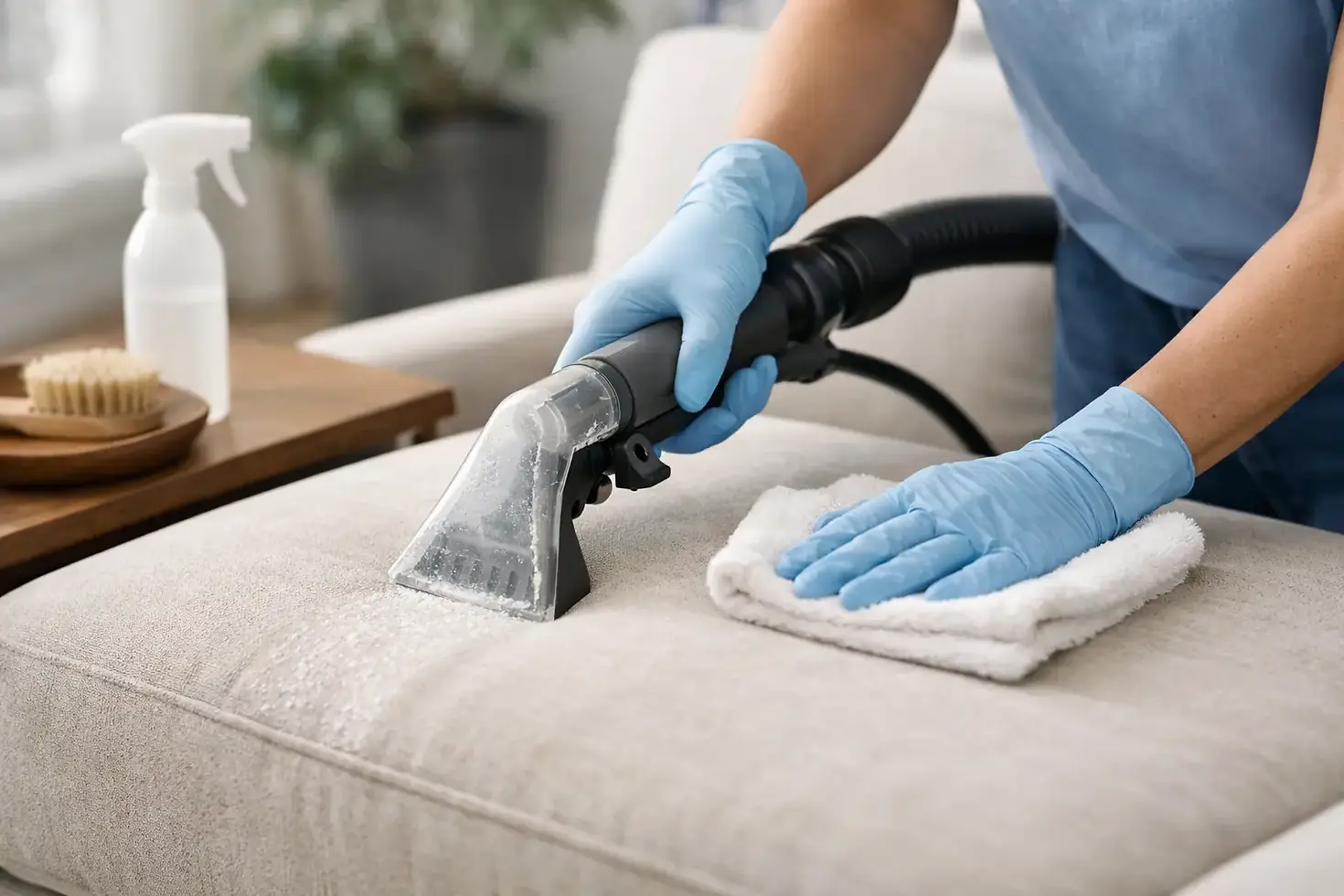
How to Clean Upholstery Without Fabric Damage Safely
- 3 days ago
- 6 min read
A sofa can look worn out long before its fabric is actually worn out. Body oils, pet hair, food spills, dust, and everyday use settle into upholstery gradually, often leaving homeowners unsure what to do next. The goal is to clean upholstery without fabric damage, which means choosing a method that removes soil without causing water marks, shrinkage, color loss, stiff fibers, or lingering odors.
The safest approach is not always the strongest cleaner or the hottest machine. It starts with identifying the material, respecting the manufacturer’s care instructions, and using the least aggressive method that can realistically solve the problem. For deeply soiled furniture, delicate fabrics, or persistent pet odors, professional upholstery cleaning is often the better value than risking an expensive replacement.
Start With the Upholstery Cleaning Code
Before applying any cleaner, check the tag beneath the cushions, under the frame, or along the skirt of the furniture. Most upholstered pieces include a cleaning code that tells you what type of product or process is appropriate. This small label can prevent the most common forms of fabric damage.
W means water-based cleaning solutions are generally safe.
S means use a solvent-based cleaner only, with no water-based products.
WS or SW means either water-based or solvent-based products may be used.
X means vacuum only. Cleaning with water or solvents may permanently damage the fabric.
These codes are a useful starting point, but they do not tell the whole story. A fabric may tolerate water yet still be vulnerable to overwetting, aggressive scrubbing, or high heat. Cotton, linen, rayon, velvet, silk, wool, and some blends can react unpredictably if the wrong process is used.
If the tag is missing, do not assume a standard upholstery shampoo is safe. Test any product in a small, hidden area first, such as the back edge of a cushion. Let the area dry completely before judging the result. Look for color transfer, a ring, rough texture, shrinking, or changes in sheen.
How to Clean Upholstery Without Fabric Damage at Home
For routine maintenance and fresh spills, gentle cleaning can make a noticeable difference. The key is to avoid saturating the fabric. Excess moisture can push soil deeper into the cushion, create brown water marks, damage padding, and encourage mildew odors in Southern California’s warmer conditions.
Vacuum First, Then Treat the Spot
Vacuuming is more than a cosmetic step. Dry dust, crumbs, sand, and pet hair can turn into muddy residue when moisture is added. Use a soft upholstery attachment and work slowly across cushions, seams, arms, and crevices. Remove cushions if possible and vacuum both sides as well as the frame beneath them.
For a fresh spill, blot immediately with a clean white microfiber cloth or paper towel. Press down to absorb the liquid, then switch to a dry section of the cloth and repeat. Do not rub. Rubbing spreads the spill, pushes it into the fibers, and can create a fuzzy or distorted patch in the fabric.
Use Less Product Than You Think You Need
Once you have confirmed the cleaning code, apply cleaner to a cloth rather than pouring or spraying it directly onto the furniture. This gives you more control over the amount of moisture reaching the fabric.
For W-coded fabric, a small amount of upholstery-safe, water-based cleaner can be worked into the spot with gentle blotting. Avoid household dish soap, laundry detergent, bleach, or all-purpose sprays unless the furniture manufacturer specifically approves them. These products can leave sticky residue that attracts more dirt, alter color, or break down the fabric’s protective finish.
For S-coded fabric, use only a product designed for dry-cleaning upholstery. Solvent products require good ventilation and careful use, particularly around children, pets, and open flames. If you are uncertain about the fabric, stop after testing rather than escalating to a stronger product.
Dry the Furniture Completely
After cleaning, blot away as much moisture as possible with a dry towel. Open windows when outdoor conditions allow, run ceiling fans, or use a room fan to improve airflow. Avoid using high heat from a hair dryer, which can shrink fibers, set stains, or affect adhesives inside the furniture.
Cushions should feel dry all the way through before they are put back into regular use. A surface that feels dry may still have moisture in the foam beneath it. If a cushion has been heavily saturated, it may need professional extraction and controlled drying to prevent odor or mold concerns.
Stain Removal Depends on What Caused the Stain
The right treatment depends on the stain, the fabric, and how long the stain has been sitting. A one-size-fits-all stain remover is often where fabric damage begins.
Food and beverage spills usually respond best when addressed quickly. Blot the liquid, work from the outer edge toward the center, and use the mildest approved cleaner for the fabric code. Red wine, coffee, juice, and colorful sauces can leave dye stains that may need professional treatment even after the initial spill is removed.
Grease, makeup, and body oil are different. They often spread when water is used too soon. These stains generally require a fabric-safe solvent process or a professional cleaner who can break down oily residue without leaving a larger ring behind.
Pet accidents require more than surface spot cleaning. Urine can travel through upholstery fabric and into cushion foam, where odor-causing residue remains long after the visible stain is gone. Covering the smell with fragrance does not resolve the source. A proper treatment may require targeted odor removal, extraction, and drying methods based on the fabric and cushion construction.
Ink, nail polish, paint, and unknown stains are high-risk situations. Repeated DIY attempts can permanently set the stain or strip color from the fabric. Take a clear photo, note what caused the stain if you know, and seek professional guidance before applying multiple products.
Avoid These Common Causes of Upholstery Damage
The biggest mistake is over-scrubbing. A stiff brush may seem effective, but it can fray delicate fibers, flatten velvet, create permanent texture changes, and leave a visibly lighter area. Gentle blotting and controlled agitation are safer than force.
Another common issue is using too much water. Rental machines and home carpet cleaners may not be designed for upholstered furniture, even when they include an attachment. Furniture has layers: face fabric, backing, padding, foam, webbing, and sometimes wood. Moisture that reaches those inner layers can be difficult to extract without professional equipment.
Steam also deserves caution. Heat can be useful on certain durable, colorfast synthetic fabrics, but it is not automatically safe for every couch or chair. Natural fibers, loose weaves, velvet, silk, and older upholstery may react poorly to heat and moisture. The fabric code and a careful test matter more than the cleaning tool’s marketing claims.
Finally, do not skip the rinse or residue-removal stage when using a cleaner that requires it. Leftover cleaning solution can make the furniture feel stiff and attract dirt faster, causing the same area to look dirty again within weeks.
When Professional Upholstery Cleaning Is the Safer Choice
Professional service is especially useful when furniture is heavily soiled, has a strong odor, includes delicate fabric, or has stains that have resisted basic spot treatment. A trained technician can identify fiber type, evaluate colorfastness, select the right cleaning chemistry, and control moisture levels throughout the process.
This matters for high-value sectionals, dining chairs, recliners, office seating, hotel furniture, and rental properties where appearance affects the next tenant or guest experience. A professional can also reach embedded soil in cushions and seams that vacuuming and surface cleaning cannot remove.
At Pristine Steam, upholstery cleaning is approached as a fabric-care service, not a generic wash. The process is selected around the furniture’s material, condition, and cleaning needs, with eco-conscious methods designed to deliver visible results while protecting the surface being cleaned.
Keep Upholstery Cleaner Between Deep Cleanings
Regular care reduces the need for aggressive cleaning later. Vacuum upholstery every one to two weeks in homes with pets, children, or frequent visitors. Rotate and fluff removable cushions according to the manufacturer’s guidance so wear and soil do not concentrate in the same areas.
Address spills promptly, but avoid turning every small spot into a wet-cleaning project. A quick blot and proper spot treatment are usually enough for a fresh incident. For homes with pets, eating areas near furniture, or light-colored upholstery, professional deep cleaning on a planned schedule can help prevent soil buildup from becoming permanent-looking discoloration.
Your furniture should feel comfortable to use, not too delicate to live on. With the right care method, timely spill response, and professional help when the fabric calls for it, you can protect the look, feel, and lifespan of the upholstery you rely on every day.


Comments